
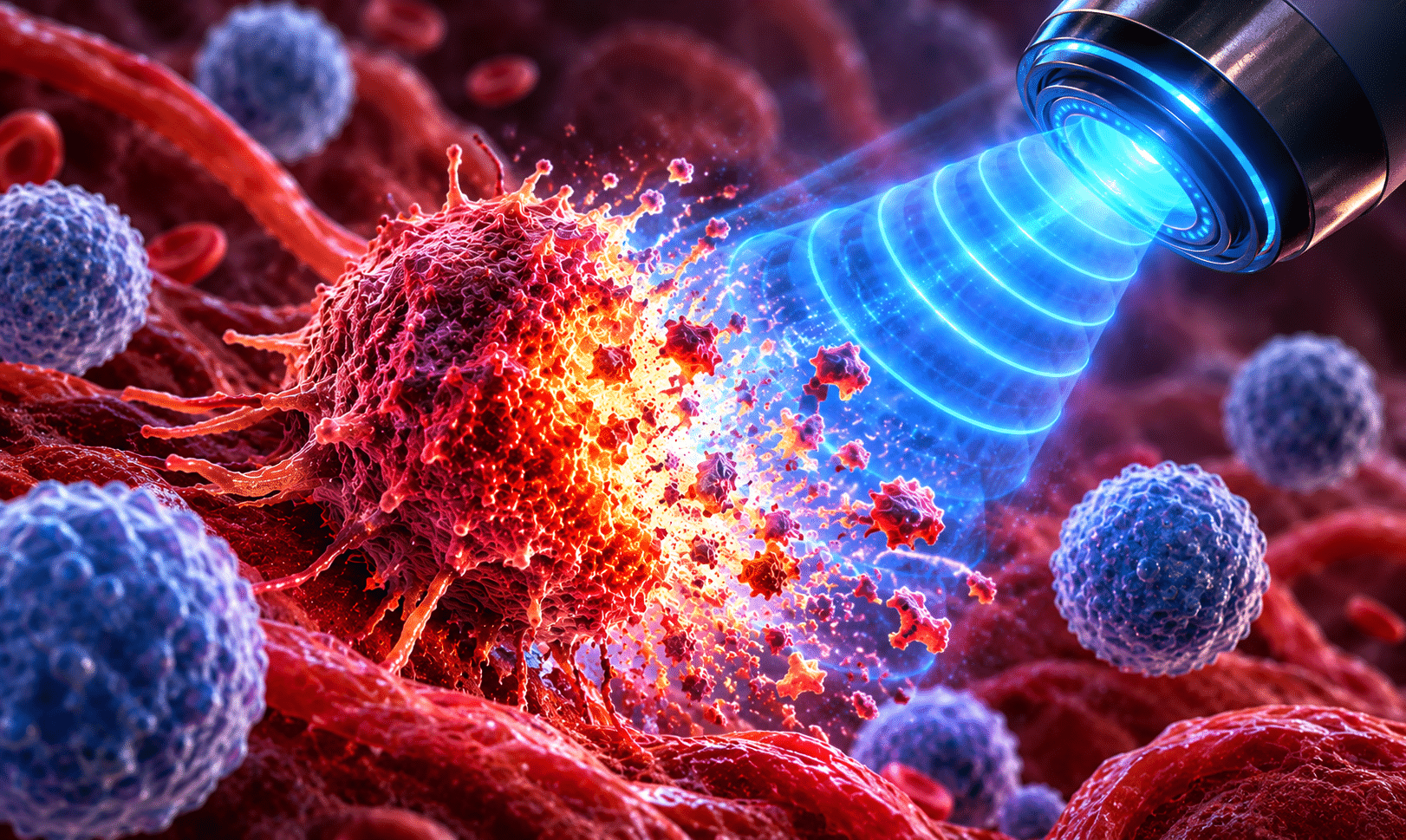
Imagine a cancer treatment that can destroy a tumor inside the body without making a surgical incision, inserting a needle into the tumor, or relying on radiation to kill cancer cells. Instead of cutting or burning the tumor, doctors use precisely focused sound waves to break it apart.
It may sound like something from a science-fiction movie, but this technology is already being used to treat certain liver tumors.
Known as histotripsy, the innovative procedure received authorization from the U.S. Food and Drug Administration (FDA) in October 2023. It uses focused ultrasound energy to mechanically destroy targeted tissue, offering some patients a new treatment option that does not require traditional surgery.
The technology is attracting attention because it could change how doctors approach certain tumors, particularly those that are difficult to remove surgically. However, there is an important distinction: histotripsy is currently authorized for liver tumors, not every type of cancer, and it does not automatically replace chemotherapy or other established treatments.
How Does the Sound-Wave Cancer Treatment Work?
Histotripsy uses focused ultrasound waves to target a tumor from outside the body.
Unlike conventional ultrasound, which is commonly used to create images of internal organs, histotripsy delivers carefully controlled acoustic pulses that generate microscopic bubbles within the targeted tissue.
These bubbles rapidly expand and collapse, creating mechanical forces that break apart the structures of tumor cells.
Rather than relying on extreme heat or radiation to destroy the cancer, the procedure physically disrupts the targeted tissue. The resulting cellular debris can then be processed and gradually cleared by the body.
The treatment is delivered using a specialized system called the Edison Histotripsy System, developed by HistoSonics.
Doctors use ultrasound imaging to help identify and target the treatment area. This allows them to direct the energy toward a specific tumor while attempting to spare surrounding structures.
According to the University of Michigan, which helped pioneer the technology, histotripsy represents a new approach to destroying targeted tissue without the physical cutting associated with conventional surgery.
Why Is This Different From Traditional Cancer Treatment?
Cancer treatment depends on several factors, including the type of cancer, its location, how far it has spread, and the patient’s overall health.
Surgery attempts to remove a tumor, while chemotherapy uses drugs to kill cancer cells or stop their growth. Radiation therapy uses high-energy radiation to damage cancer cells.
Histotripsy works differently.
Instead of removing the tumor with surgical instruments or destroying it through heat or radiation, it uses mechanical forces generated by focused sound waves.
Because the procedure does not require an incision or a needle inserted into the tumor, it may reduce some of the physical burdens associated with invasive treatments.
For certain patients, this could be particularly valuable when a tumor is difficult to reach or when an operation presents significant risks.
However, histotripsy is a localized treatment. It targets specific tumors rather than treating cancer cells throughout the body. That distinction matters because some cancers spread to multiple organs or involve microscopic disease that cannot be targeted with a local procedure alone.
For those patients, chemotherapy, immunotherapy, targeted therapies, surgery, radiation, or combinations of treatments may still be necessary.
Which Cancers Can Be Treated With Histotripsy?
The FDA-authorized Edison System is intended for the noninvasive destruction of liver tumors, including tumors that originate in the liver and tumors that have spread there from other parts of the body.
The liver is a particularly important target because it is a common site of cancer spread. Patients with colorectal cancer, for example, may develop secondary tumors in the liver.
Some liver tumors can be surgically removed, but surgery is not an option for everyone. The number, size, location, and accessibility of tumors, along with the patient’s liver function and overall health, can influence treatment decisions.
Histotripsy may provide another option for selected patients whose tumors are challenging to treat with conventional approaches.
Researchers are also investigating whether the technique can be used for cancers in other organs. However, promising research does not mean that the treatment is already authorized or proven effective for every cancer type.
For now, patients should understand that its established regulatory use is specifically focused on liver tumors.
Could Sound Waves Eliminate the Need for Chemotherapy?
This is one of the biggest questions surrounding the technology.
The possibility of destroying a tumor without surgery or chemotherapy is understandably exciting. But histotripsy should not be considered a universal replacement for chemotherapy, radiation, or surgery.
The procedure targets a defined area of tissue. If cancer has spread throughout the body, treating a single tumor may not address the entire disease.
In some circumstances, doctors may consider histotripsy as part of a broader treatment plan. A patient might receive systemic treatment to address cancer elsewhere while histotripsy is used to target particular liver tumors.
In other cases, a patient may be considered for histotripsy because surgery is not feasible or because a less invasive local treatment is desirable.
The appropriate approach depends on an individual’s diagnosis and treatment goals.
The FDA’s authorization of the device establishes a new treatment option, but it does not prove that histotripsy is superior to chemotherapy or surgery in every situation. Researchers are still working to determine how best to use it alongside established cancer treatments.
What Are the Potential Benefits?
One of the most appealing features of histotripsy is that it can destroy targeted tissue without requiring a surgical incision.
Potential advantages include:
- No surgical incision: The treatment delivers focused energy from outside the body.
- Mechanical tumor destruction: It breaks down targeted tissue rather than relying on heat to destroy it.
- Precision: Imaging helps clinicians direct the treatment toward the intended tumor.
- Potentially easier recovery: Some patients may avoid the recovery associated with major surgery.
- Another option for selected patients: It may be useful when conventional surgery is difficult or unsuitable.
These potential benefits are important, but they should not be confused with a guarantee of a complication-free procedure.
Histotripsy still requires careful patient selection, specialized equipment, and trained medical professionals. Depending on the patient’s condition and the procedure, anesthesia may be required. Complications and unintended injury can also occur.
The degree of benefit varies from patient to patient, and long-term evidence is still developing.
What Does the FDA Authorization Actually Mean?
The FDA granted De Novo authorization to the Edison Histotripsy System on October 6, 2023. The agency subsequently recorded a separate 510(k) decision for the device in March 2024.
These regulatory milestones are significant, but the distinction between authorizing a medical device and approving a cancer drug is important.
Histotripsy is a medical device-based procedure, not a newly approved chemotherapy medication. Its authorization applies to the device’s specified intended use, rather than establishing that sound waves can cure cancer generally.
You can review the regulatory record through the FDA’s medical device database.
The technology has moved beyond laboratory research and into clinical practice, but researchers continue to investigate its effectiveness, limitations, and long-term outcomes.
For example, scientists are examining how reliably it controls treated tumors, which patients benefit most, and how it compares with existing local treatments.
These questions are essential to determining where histotripsy belongs in modern cancer care.
Could This Technology Change the Future of Cancer Treatment?
Histotripsy represents an important development in the search for more precise and less invasive ways to treat cancer.
The idea of using sound waves to physically break apart tumor tissue offers a fundamentally different approach from conventional surgery, radiation, and drug-based treatments.
For patients who have limited treatment options, that difference could be meaningful.
But the future of histotripsy will depend on continued research, improved patient selection, and a clearer understanding of its long-term benefits and risks.
Scientists are also investigating whether the destruction of tumor tissue might influence the immune system’s response to cancer. Although this is an intriguing area of research, it remains an active scientific question rather than proof that histotripsy can independently eliminate cancer throughout the body.
Ultimately, the technology’s greatest contribution may be giving doctors another tool to use when developing personalized treatment plans.
A cancer treatment that uses sound waves to destroy tumors is no longer science fiction. It is a real medical technology with an established role in treating selected liver tumors. While it is not a universal replacement for surgery or chemotherapy, it represents a promising direction in the development of more targeted cancer care.
As clinical experience grows and researchers publish more evidence, doctors will learn more about which patients are most likely to benefit and how histotripsy can best be combined with other treatments.
For now, the most important takeaway is that this technology expands the available options for certain patients while leaving many important questions for ongoing research.
Medical note: Anyone considering histotripsy should consult an oncology team to determine whether the procedure is appropriate for their specific diagnosis. Patients should not delay or discontinue established cancer treatment based on reports about this technology.
Sources for further reading:
- University of Michigan: Tumor-destroying sound waves receive FDA authorization
- FDA: Edison System De Novo authorization record
- Johns Hopkins Medicine: Histotripsy offers new hope to patients with liver tumors